 Sign inMy profileSign outJoin the Community
Becoming a Teacher Educator Across Borders
Why understanding teacher educators may be essential to strengthening teacher preparation in Haiti
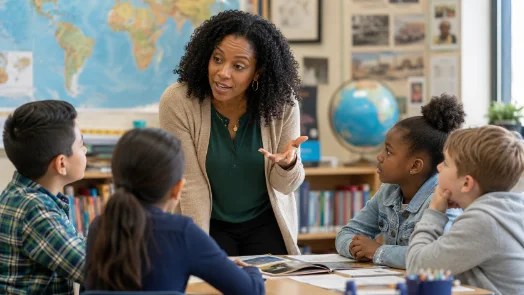
My passion for teaching and learning began in middle school in Haiti. Every morning, our school director spoke to students about the deeper purpose of education, emphasizing that it was not only a pathway to knowledge but also a means of developing character, responsibility, and leadership. He often reminded us that an educated population has the power to transform a nation and that students have a responsibility to contribute positively to Haiti's future. These conversations had a lasting impact on me and inspired my desire to become an educator.
After graduating high school, I enrolled in an education program with a minor in school administration because I believed teaching and educational leadership would allow me to contribute meaningfully to my community. During my undergraduate studies, I developed a strong interest in teaching and often volunteered to teach English as a Foreign Language (EFL) when professors were unavailable.
These experiences strengthened my confidence and commitment to education. Following graduation, I worked closely with a university professor and the secretary-general before pursuing a master's degree in education. During my master's in Haiti, I had the opportunity to teach pre-service teachers, an experience that significantly shaped my professional identity and future aspirations in teacher education.
Questioning Teacher Education Practices
Teaching teacher candidates in a public university in southern Haiti while pursuing a master's degree exposed me to a persistent tension between educational theory and practice. Through my coursework, I have learned about inclusion, equity, culturally responsive teaching, and social justice, all of which emphasized active engagement, critical thinking, and meaningful learning. Yet, many teacher education classrooms rely on traditional lecture-based instruction, with professors presenting notes and students passively copying them. Opportunities for discussion, collaboration, and reflection were often limited.
This disconnect was particularly troubling because these programs were responsible for preparing future teachers. It led me to question how teacher candidates could learn student-centered and inclusive pedagogies if they rarely experienced them themselves. How could teacher education promote innovative teaching while modeling traditional approaches? These questions marked the beginning of my journey as a reflective teacher educator. At the time, however, I lacked the experience and institutional influence to challenge these practices directly. Recognizing the need for a deeper understanding of educational research and teacher education, I decided to pursue doctoral study and ultimately applied for the Fulbright Scholarship program to study in the United States.
Expanding My Understanding of Teacher Education
Beginning my PhD marked a significant turning point in my professional journey. It was during this stage that I began to engage seriously with research on teacher education and the work of teacher educators. Initially, my understanding of a teacher educator was quite narrow. I assumed that teacher educators were simply individuals who taught future teachers in university classrooms. If one was not teaching future teachers directly, I did not consider them a teacher educator, and these were part of the myths that many people who do not learn teacher education have.
However, after participating in doctoral seminars focused on teacher educator research and practice, I began to recognize the complexity of the field. I learned that teacher educators can occupy multiple roles. They are instructors, researchers, mentors, curriculum developers, advocates, policymakers, and agents of educational change. Teacher education extends far beyond teaching courses; it involves shaping professional identities, generating knowledge about teaching, and contributing to the improvement of educational systems.
This expanded understanding pushed me to reflect critically on my experiences and assumptions related to education. I began questioning not only my own practices but also the broader structures that shape teacher preparation. Throughout my inquiries, I have started to reflect back to where I started as a teacher educator – Haiti.
Comparing My Evolution in Two Educational Contexts: Haiti and the United States
My doctoral studies have encouraged me to examine teacher education through the lens of two distinct sociocultural and educational contexts: Haiti and the United States. As I engaged more deeply with the literature, I became aware of the substantial body of research on teacher preparation, teacher educator development, and efforts to better address the needs of diverse learners. In contrast, I found relatively little research focused on teacher educator practices, identities, and preparation within the Haitian context. This contrast was both significant and concerning, prompting me to consider the implications of this knowledge gap and inspiring me to take action.
Rather than viewing this gap as merely an academic concern, I came to see it as both an opportunity and a responsibility. Meaningful improvements in teacher education require a strong foundation of locally grounded knowledge. If teacher education is expected to prepare teachers capable of addressing the realities of Haitian classrooms, then research must also examine the experiences, practices, and challenges of those responsible for preparing them. This realization strengthened my commitment to contributing to the Haitian teacher education landscape.
One of the first questions I asked myself was: How can teacher education improve if there is limited research examining how teachers are taught to teach in Haiti? As I explored the literature, my attention increasingly shifted toward the individuals responsible for preparing future teachers. Much of the information I found about teacher preparation in Haiti came from organizations such as UNESCO and UNICEF, yet little addressed teacher educators themselves.
This led me to ask several interconnected questions: What qualifications do teacher educators possess? How are they prepared for their roles? What forms of knowledge do they draw upon when teaching future teachers? To what extent are their instructional decisions influenced by research, professional training, personal experiences, institutional expectations, or cultural traditions?
These questions also raised concerns about the quality of teacher preparation in Haiti. If teacher educators receive little formal preparation for their role, what guides their practice? Do they teach primarily as they were taught, or are their approaches informed by contemporary educational research? Are their practices shaped by institutional norms, cultural traditions, or other contextual influences? The absence of clear answers highlighted the need for more systematic research on teacher educator development in Haiti.
Unlike many professions in which pathways to expertise are clearly defined through professional standards and specialized preparation programs, teacher educator preparation in Haiti appears to lack a clearly recognized professional pathway. Becoming a teacher educator is often assumed to be a natural progression from classroom teaching, yet preparing future teachers requires knowledge and skills that extend beyond teaching experience alone. Teacher educators must be able to model effective pedagogy, mentor developing professionals, connect theory to practice, and engage in critical reflection about the purposes of education (Dodman et al., 2023).
As I continue my journey as both a researcher and teacher educator, I view these questions as opportunities to generate knowledge and contribute to a deeper understanding of teacher education within the Haitian context. By investigating how teacher educators learn, develop, and enact their roles, I hope to contribute to scholarship that informs policy, strengthens teacher preparation, and ultimately improves educational opportunities for future generations of Haitian students.
Emerging Inquiries and Commitments
As an emerging international teacher educator, these questions remain central to my professional and scholarly development. My experiences in Haiti and doctoral studies in the United States have transformed how I understand teacher education. I no longer view it simply as preparing future teachers for the classroom; rather, I see it as a complex field that requires inquiry, reflection, and continuous development. Understanding how teacher educators learn to prepare teachers is essential to improving educational systems and outcomes.
Studying across two educational contexts has broadened my perspective on teacher education. In the United States, exposure to scholarship on teacher educator identity, professional learning, self-study, and reflective practice has shown me that becoming a teacher educator is not a simple transition from teaching children to teaching pre-service teachers. It is an ongoing process of learning, reflection, and identity formation. This insight has encouraged me to examine my development while considering the experiences of teacher educators working in contexts where formal preparation and professional support are limited.
Today, I am particularly interested in how teacher educators develop their knowledge and practices and how sociocultural, institutional, and historical contexts shape their work. I am also interested in the challenges they face as they navigate multiple roles as teachers, mentors, researchers, and agents of change. These interests stem from my experiences in Haiti and the United States and have strengthened my commitment to advancing knowledge about teacher educator preparation in Haiti, an area that remains largely underexplored.
Through my research, I hope to contribute to a deeper understanding of the experiences and professional learning trajectories of Haitian teacher educators. By doing so, I aim to support stronger teacher education programs and contribute to ongoing discussions about educational quality and reform in Haiti.
My commitment to teacher education is both professional and personal. I believe that improving education requires attention not only to students and classroom teachers but also to those who prepare the next generation of educators. When I reflect on my journey, I often think of the school director who inspired me as a young student.
What began as admiration for an educational leader has evolved into a commitment to strengthening teacher education through research and practice. Today, that commitment guides my work and my aspiration to support the development of reflective, inclusive, and transformative teacher educators.
Dodman, S. L., La Croix, L., Helmsing, M. E., Fox, R. K., Brusseau, R., & Kirschner, S. (2023). Considering the world of the teacher educator: The shaping of the critical teacher educator through informed enactment and reflection. In B. M. Butler, A. Cuenca, & J. K. Ritter (Eds.), Pathways into teacher education: Profiles of emerging teacher educator development (pp. 25–40). Information Age Publishing.
- Teacher candidates were taught student-centered, inclusive pedagogy through lecture and note-copying. How can they learn practices they rarely experience?
- Teacher educators aren't only people who teach future teachers. They are also researchers, mentors, curriculum developers, advocates and agents of change.
- Research on teacher educators is extensive in the United States but scarce in Haiti. That gap is both an opportunity and a responsibility.
- What qualifications do Haitian teacher educators have, how are they prepared, and what guides their practice: research, tradition, or how they were taught?
- In Haiti there is no clear professional pathway to becoming a teacher educator. It is often assumed to follow naturally from classroom teaching.
- Improving education requires attention to students and teachers, and also to the people who prepare the next generation of educators.
Share ideas, ask questions, and learn with colleagues around the world.
Browse more stories